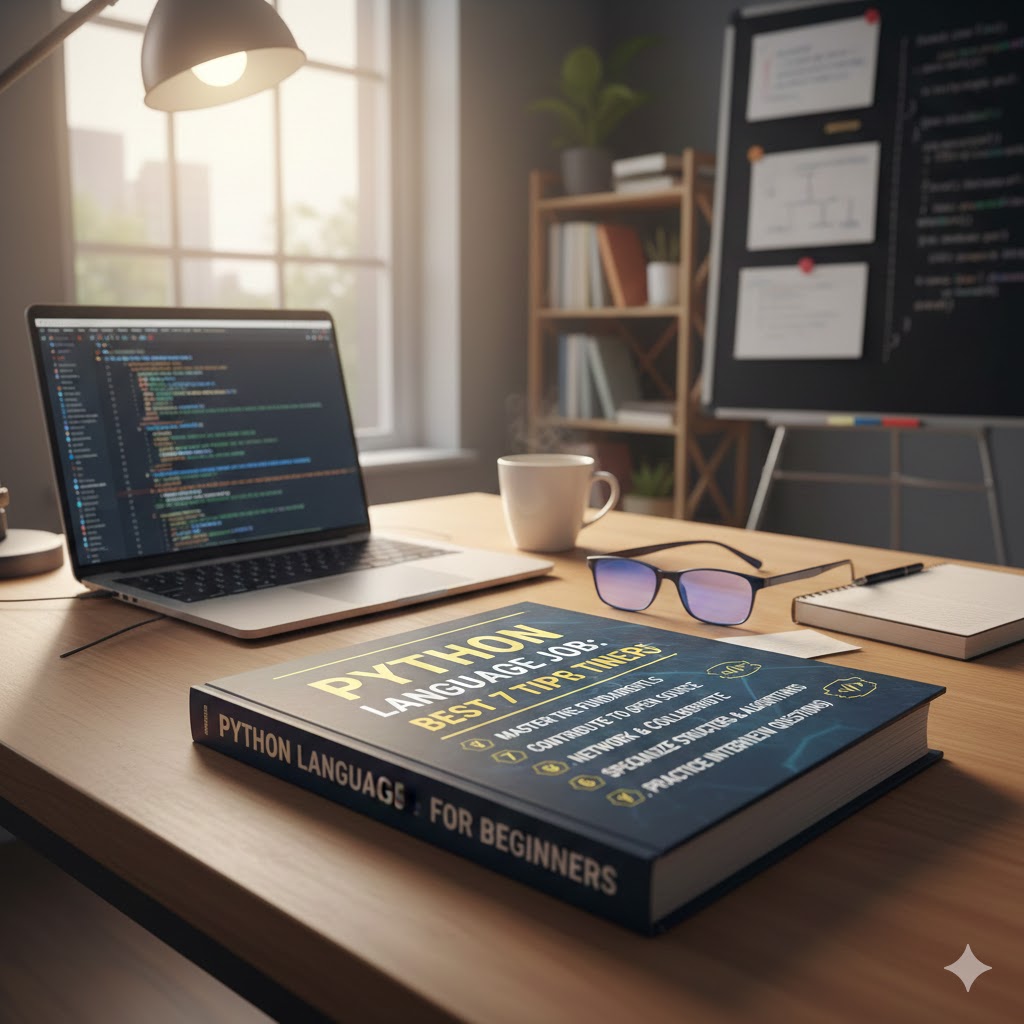
Python Language Job Best 7 Tips for Beginners
Are you looking to break into the tech industry with one of the most in-demand skills? A python language job might be exactly what you need to kickstart your career. Python’s versatility, readability, and extensive libraries have made it a favorite among employers across various industries, from web development to data science and artificial intelligence.
Whether you’re a complete novice or have some coding experience, this guide will equip you with essential knowledge to help you land your first python language job. We’ll cover everything from required skills and learning resources to resume tips and interview preparation.
Table of Contents
- Understanding Python Language Jobs
- Essential Skills for Python Developers
- Learning Path: From Beginner to Job-Ready
- Building an Impressive Portfolio
- Python Developer Resume Tips
- Interview Preparation for Python Jobs
- Salary Expectations and Growth
- Conclusion
- Frequently Asked Questions
Understanding Python Language Jobs

The demand for python language job opportunities continues to grow year after year. According to industry reports, Python consistently ranks among the top three programming languages, with companies from startups to tech giants actively seeking qualified Python developers.
Python’s applications span across various domains:
- Web Development: Using frameworks like Django and Flask
- Data Science & Analysis: Leveraging libraries like Pandas and NumPy
- Machine Learning & AI: Implementing solutions with TensorFlow and PyTorch
- Automation & Scripting: Creating efficient scripts for repetitive tasks
- Game Development: Using libraries like Pygame
Python developer jobs are abundant, but the competition can be fierce. That’s why it’s crucial to understand what employers are looking for and how to position yourself effectively in the job market.
Essential Skills for Python Developers
Core Python Skills
To secure a python language job, you must first master the fundamentals:
# Example of basic Python skills
def demonstrate_basics():
    # Variables and data types
    name = "Python Developer"
    years_experience = 0
    skills = ["Python", "Problem-solving", "Learning"]

    # Control structures
    if years_experience < 1:
        print(f"As a beginner {name}, focus on mastering:")
        for skill in skills:
            print(f"- {skill}")

    # Functions and returns
    return "Ready to learn more!"

print(demonstrate_basics())
Beyond the basics, you should understand:
- Object-oriented programming principles
- Exception handling
- File I/O operations
- Working with external libraries
- Testing and debugging
Complementary Skills
Technical skills alone aren’t enough. Employers seeking candidates for python developer jobs also value:
- Version Control: Primarily Git and GitHub
- Problem-Solving: Ability to break down complex issues
- Database Knowledge: SQL basics at minimum
- Communication Skills: Explaining technical concepts clearly
- Continuous Learning: Staying updated with Python advancements
Learning Path: From Beginner to Job-Ready
Step 1: Master the Fundamentals
Start with Python basics through online courses, books, or bootcamps. Focus on:
- Syntax and data structures
- Functions and modules
- Object-oriented programming
- File handling
- Error handling
Step 2: Build Projects
Apply your knowledge by building progressively complex projects:
# Example of a beginner project: Simple To-Do App
class TodoList:
    def __init__(self):
        self.tasks = []

    def add_task(self, task):
        self.tasks.append({"task": task, "completed": False})
        print(f"Task '{task}' added successfully!")

    def complete_task(self, index):
        if 0 <= index < len(self.tasks):
            self.tasks[index]["completed"] = True
            print(f"Task '{self.tasks[index]['task']}' marked as completed!")
        else:
            print("Invalid task index!")

    def display_tasks(self):
        if not self.tasks:
            print("No tasks in your list!")
            return

        print("nYour To-Do List:")
        for i, task in enumerate(self.tasks):
            status = "✓" if task["completed"] else "□"
            print(f"{i}. [{status}] {task['task']}")

# Usage
my_todos = TodoList()
my_todos.add_task("Learn Python basics")
my_todos.add_task("Build a simple project")
my_todos.complete_task(0)
my_todos.display_tasks()
Step 3: Specialize
After mastering the basics, choose a specialization for your python language job path:
- Web Development: Learn Django or Flask
- Data Science: Focus on Pandas, NumPy, and visualization libraries
- Machine Learning: Study TensorFlow or PyTorch
- Automation: Explore libraries like Selenium or Requests
Step 4: Real-world Experience
Before applying for jobs, gain practical experience through:
- Open-source contributions
- Freelance projects
- Internships
- Volunteer work for non-profits
Building an Impressive Portfolio
Your portfolio is crucial for landing a python language job, especially as a beginner. Here’s how to create one that stands out:
GitHub Profile Optimization
- Pin your best projects
- Write detailed READMEs
- Maintain consistent commit history
- Contribute to open-source projects
Personal Projects to Include
- Web Application: A full-stack app using Django or Flask
- Data Analysis Project: Showcase data manipulation and visualization
- Automation Tool: Script that solves a real problem
- API Integration: Project that connects to external services
Example of a portfolio-worthy project structure:
# Example of a portfolio-ready Flask API
from flask import Flask, request, jsonify
import sqlite3

app = Flask(__name__)

def get_db_connection():
    conn = sqlite3.connect('bookstore.db')
    conn.row_factory = sqlite3.Row
    return conn

@app.route('/api/books', methods=['GET'])
def get_books():
    conn = get_db_connection()
    books = conn.execute('SELECT * FROM books').fetchall()
    conn.close()

    return jsonify([dict(book) for book in books])

@app.route('/api/books', methods=['POST'])
def add_book():
    book_data = request.get_json()

    # Validate request data
    if not all(key in book_data for key in ('title', 'author', 'published_year')):
        return jsonify({'error': 'Missing required book information'}), 400

    conn = get_db_connection()
    conn.execute('INSERT INTO books (title, author, published_year) VALUES (?, ?, ?)',
                 (book_data['title'], book_data['author'], book_data['published_year']))
    conn.commit()
    conn.close()

    return jsonify({'success': True}), 201

if __name__ == '__main__':
    app.run(debug=True)
Python Developer Resume Tips
Your resume is often your first impression on potential employers. Here’s how to make it stand out for python developer jobs:
Key Sections to Include
- Skills Summary: List Python skills and libraries
- Projects: Highlight your most impressive work
- Education: Include relevant courses, even if self-taught
- Experience: Emphasize Python-related work, including personal projects
- Certifications: Add any relevant Python certifications
Skills Formatting
Instead of just listing “Python” as a skill, be specific:
- Python 3.x
- Django/Flask
- API Development
- Unit Testing (pytest)
- Data Analysis (Pandas, NumPy)
- Version Control (Git)
Keywords for ATS
Include keywords from job descriptions to pass Applicant Tracking Systems (ATS):
- Python Developer
- Software Engineer
- Backend Developer
- Flask/Django Developer
- Python Programming
Interview Preparation for Python Jobs
Technical Questions
Be prepared to answer questions and solve problems involving:
Python Fundamentals:
- Data structures (lists, dictionaries, sets)
- List comprehensions
- Lambda functions
- Decorators
- Generators
OOP Concepts:
- Classes and inheritance
- Encapsulation
- Polymorphism
- Method overriding
Problem-Solving:
- Algorithmic challenges
- Coding exercises
- Debugging exercises
Coding Challenges
Practice common coding challenges like:
# Example of a common interview coding question
def is_palindrome(s):
    """
    Check if a string is a palindrome (reads the same forward and backward)
    ignoring non-alphanumeric characters and case.

    Args:
        s (str): The input string

    Returns:
        bool: True if palindrome, False otherwise
    """
    # Remove non-alphanumeric characters and convert to lowercase
    filtered_chars = [c.lower() for c in s if c.isalnum()]

    # Check if the filtered string is equal to its reverse
    return filtered_chars == filtered_chars[::-1]

# Test cases
test_strings = ["A man, a plan, a canal: Panama", "race a car", "hello"]
for test in test_strings:
    print(f"'{test}' is{' ' if is_palindrome(test) else ' not '}a palindrome")
Behavioral Questions
Be ready to discuss:
- How you solved challenging problems
- Your collaboration experiences
- How you handle feedback
- Your learning process for new technologies
Salary Expectations and Growth
Entry-level python language job positions typically start between $60,000-$85,000 annually in the US, with significant variations based on:
- Location: Higher in tech hubs like San Francisco and New York
- Industry: Finance and tech companies often pay more
- Specialization: Machine learning specialists typically earn more
- Company Size: Larger companies often offer better compensation packages
As you gain experience, Python developer jobs can lead to senior roles with salaries exceeding $120,000-$150,000.
Conclusion
Breaking into the python language job market may seem daunting at first, but with dedicated learning, strategic portfolio building, and proper preparation, you can position yourself as a competitive candidate even without formal experience.
Remember that every expert Python developer started as a beginner. Focus on continuous learning, building meaningful projects, and networking within the Python community. Your journey toward securing your first Python role might take time, but the versatility and career growth opportunities make it well worth the effort.
Start by applying the seven tips we’ve covered, and you’ll be well on your way to landing your first python developer job in this exciting and rewarding field.
Frequently Asked Questions
How long does it take to learn Python well enough to get a job?
With dedicated study and practice, most beginners can reach job-readiness in 6-12 months. This assumes 10-15 hours of weekly learning and project building. The timeline can be shorter if you already have programming experience or longer if you’re learning part-time.
Do I need a computer science degree to get a Python developer job?
No, a CS degree is not strictly required for many Python developer jobs. While it can be helpful, employers increasingly value practical skills and portfolio projects over formal education. Self-taught developers with strong portfolios and problem-solving abilities regularly secure Python positions.
Which Python framework should I learn first?
If you’re interested in web development, Django provides a comprehensive “batteries-included” approach that’s excellent for beginners. For simpler applications or microservices, Flask offers a more lightweight alternative. For data science roles, focus on Pandas, NumPy, and matplotlib instead.
How important is data structure and algorithm knowledge for Python interviews?
Very important, especially for larger tech companies. Even for entry-level positions, you should understand basic data structures (lists, dictionaries, sets) and algorithms (sorting, searching). Practice solving problems on platforms like LeetCode or HackerRank to prepare for technical interviews.
Can I get a remote Python job as a beginner?
While remote Python jobs exist for beginners, they’re generally more competitive than on-site positions. To improve your chances, build a strong GitHub portfolio, contribute to open-source projects, and develop excellent communication skills. Consider starting with freelance work to build your remote work history.