
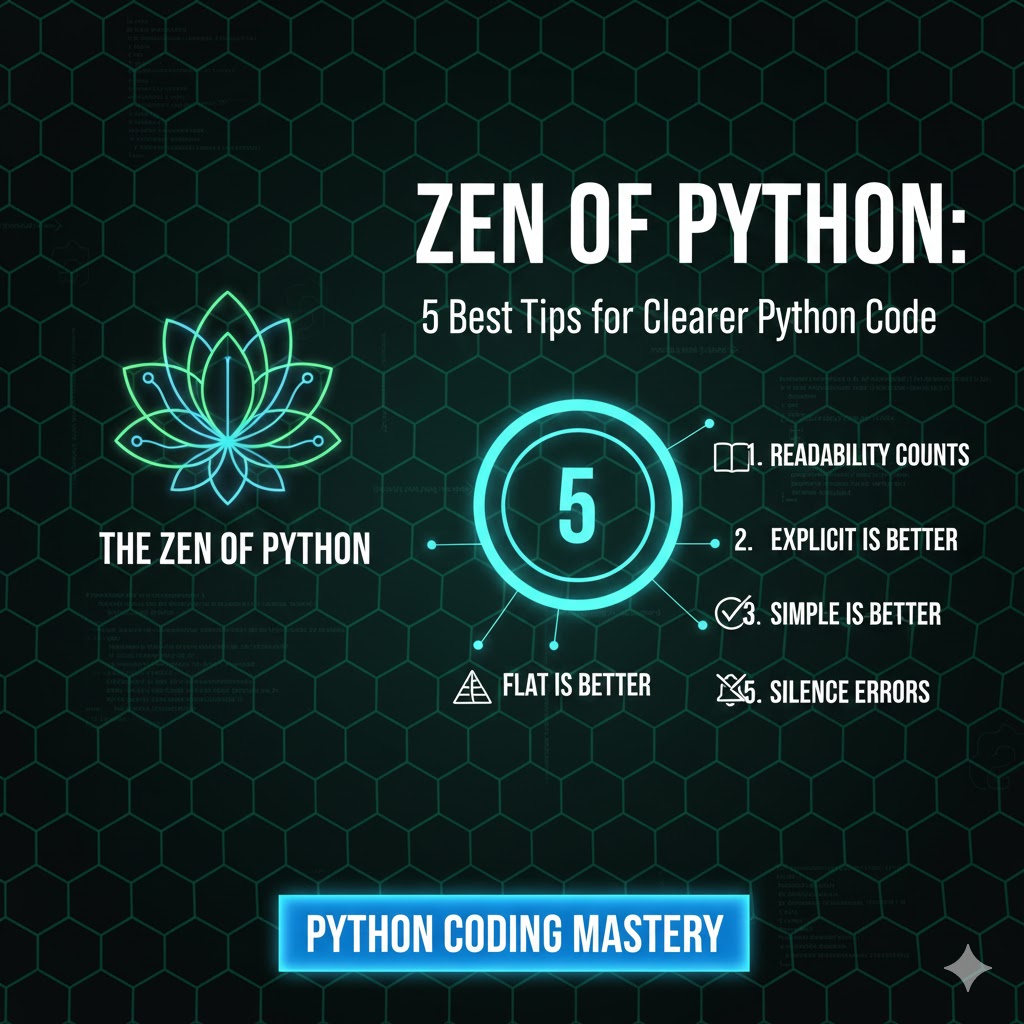
Zen of Python: 5 Best Tips for Clearer Python Code
Introduction
Ever stared at your Python code wondering why it looks like a complicated puzzle? You’re not alone. Many developers struggle with writing clean, readable code that’s easy to maintain and debug. This is where the zen of python comes in – a set of guiding principles that can transform how you approach Python programming. These principles aren’t just abstract concepts; they’re practical guidelines that help you write better code, reduce bugs, and improve collaboration. Whether you’re a beginner or experienced developer, mastering the zen of python can dramatically improve your coding efficiency and effectiveness.
The Philosophy Behind the Zen of Python

The zen of python is a collection of 19 aphorisms that capture the essence of Python’s design philosophy. Created by Tim Peters, these principles guide developers toward writing code that is readable, maintainable, and “Pythonic.” You can access these principles by typing import this in your Python interpreter.
These guidelines are perfect for:
- New Python developers learning proper coding style
- Experienced programmers transitioning from other languages
- Development teams establishing coding standards
- Anyone seeking to write more elegant Python solutions
The zen of python addresses common programming challenges like readability, simplicity, and maintainability, ensuring your code remains clean and efficient.
Key Principles & Their Applications
The core principles of the zen of python include:
- Beautiful is better than ugly: Write code that’s pleasing to read
- Explicit is better than implicit: Be clear about what your code does
- Simple is better than complex: Seek the simplest solution first
- Flat is better than nested: Avoid excessive indentation levels
- Readability counts: Code should be easy for humans to understand
These principles integrate perfectly with Python best practices and can be applied to any Python project, regardless of size or complexity.
Implementation Requirements
To fully embrace the zen of python, you’ll need:
- Python (any version, as these principles are universal)
- A code editor or IDE that supports Python
- PEP 8 linting tools (flake8, pylint, etc.)
- Willingness to refactor existing code
- An open mind to different coding approaches
No special libraries are required, as these principles are about how you write code, not what tools you use.
5 Practical Tips for Clearer Python Code
1. Embrace Descriptive Naming
# Poor naming
def calc(a, b):
    return a + b

# Better naming
def calculate_total_price(base_price, tax_amount):
    return base_price + tax_amount
Descriptive names make your code self-documenting and easier to understand at a glance.
2. Use Built-in Functions and Libraries
# Reinventing the wheel
items = [1, 2, 3, 4, 5]
total = 0
for item in items:
    total += item

# Using Python's built-ins
items = [1, 2, 3, 4, 5]
total = sum(items)
Python’s standard library follows the zen of python principles and often provides elegant solutions to common problems.
3. Follow the “One Purpose” Rule
Each function, class, or module should do one thing and do it well. This makes code easier to test, debug, and maintain.
4. Favor Readability Over Cleverness
# Clever but confusing
result = [x for sublist in [y.split() for y in text.split('n')] for x in sublist]

# Clear and readable
lines = text.split('n')
words_per_line = [line.split() for line in lines]
result = []
for word_list in words_per_line:
    for word in word_list:
        result.append(word)
5. Write Meaningful Comments and Documentation
Don’t just explain what the code does; explain why it does it that way, especially for complex logic or workarounds.
Common Mistakes to Avoid
- Overcomplicating solutions: Seeking complexity when simplicity would suffice
- Ignoring established patterns: Reinventing solutions that Python already handles well
- Writing cryptic code: Using obscure tricks that sacrifice readability
- Inconsistent styling: Mixing different coding styles in the same project
- Excessive nesting: Creating deeply nested code structures that are hard to follow
Maintaining Clean Code Long-Term
To ensure your codebase remains aligned with the zen of python:
- Schedule regular code reviews focused on readability
- Run automated linting tools as part of your CI pipeline
- Document coding standards for your team
- Refactor regularly to prevent technical debt
- Learn from open-source projects that exemplify good Python style
Conclusion
The zen of python isn’t just a set of rules—it’s a mindset that can transform your approach to Python development. By following these five tips, you’ll write cleaner, more maintainable code that’s easier for others (including future you) to understand. Remember that good code isn’t just about what works; it’s about what works elegantly and clearly. Start applying these principles today, and watch your Python code become more readable, maintainable, and truly Pythonic.
FAQs
Is the Zen of Python only for experienced developers?
No, beginners actually benefit most from following these principles as they develop good habits from the start.
How can I remember all 19 principles?
Focus on understanding the core ideas rather than memorizing them. With practice, they’ll become second nature.
Do these principles slow down development?
Initially perhaps, but they speed up maintenance, debugging, and collaboration in the long run.
Are there tools to help enforce these principles?
Yes, linters like pylint and black can help enforce many aspects of the Python style guide.
Can I apply the Zen of Python to other programming languages?
While some principles are Python-specific, many (like simplicity and readability) apply universally to good programming.